

»The Disavowed. Victims of National Socialism 1933 – 1945 – Today« will be on display from April 22 to June 19, 2026, at the Osthofen Concentration Camp Memorial, Ziegelhüttenweg 38, 67574 Osthofen. The exhibition is open Tuesday to Friday from 9 am to 5 pm and Saturday from 1 pm to 5 pm and Sunday from 11.30 am to 5 pm.
The opening will take place on April 22 at 6 pm at the concentration camp memorial. Bernhard Kukatzki, Director of the Rhineland-Palatinate State Agency for Civic Education, and Uwe Neumärker, Director of the Foundation Memorial to the Murdered Jews of Europe, will speak at the event. Waltraud Werner, Chair of the Förderverein Projekt Osthofen e.V., and Prof. Frank Nonnenmacher, a social scientist and founder of »Vevon. Association for the Remembrance of the Denied Victims of National Socialism e.V.«, will also contribute.
The exhibition commemorates people who were persecuted under National Socialism as »asocials« and »career criminals«. Their experiences take centre stage. Between 1933 and 1945, the authorities and police capitalised on social prejudices. They controlled, harass and deprive tens of thousands of their freedom. Many are murdered.
The Federal Republic of Germany, the GDR and Austria refused to compensate those affected. Their experiences of injustice are denied.
In February 2020, the German Parliament decided: »No one was rightfully imprisoned in a concentration camp; even those persecuted as ›asocials‹ and ›career criminals‹ were victims of National Socialist reign of terror«. In the context of this decision, the parliament commissioned the Foundation Memorial to the Murdered Jews of Europe and the Flossenbürg Concentration Camp Memorial to create an exhibition. It represents one of the most important remembrance projects of the decade in the Federal Republic of Germany.
Pictures from the opening presentation in Berlin, 2024
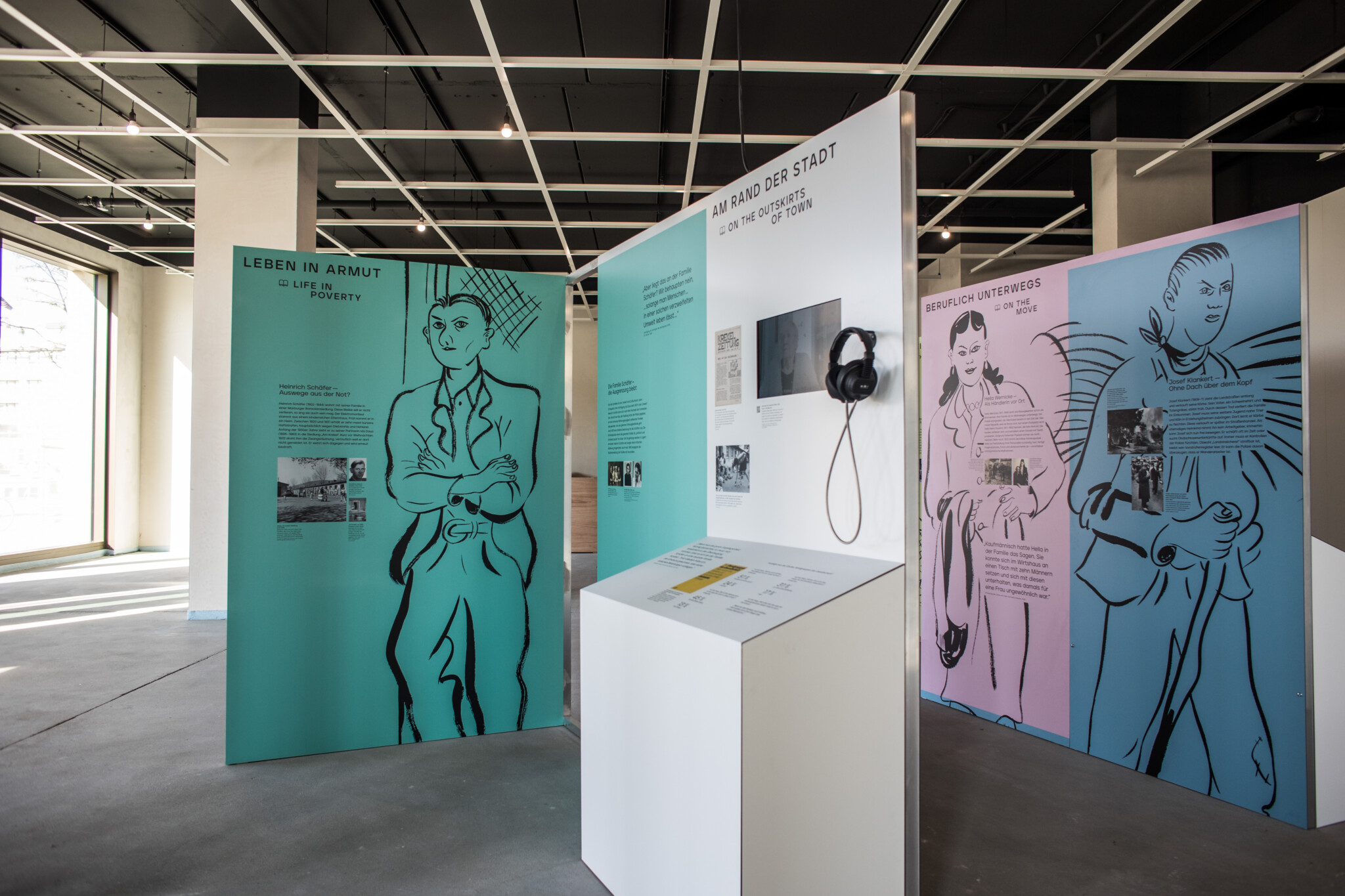
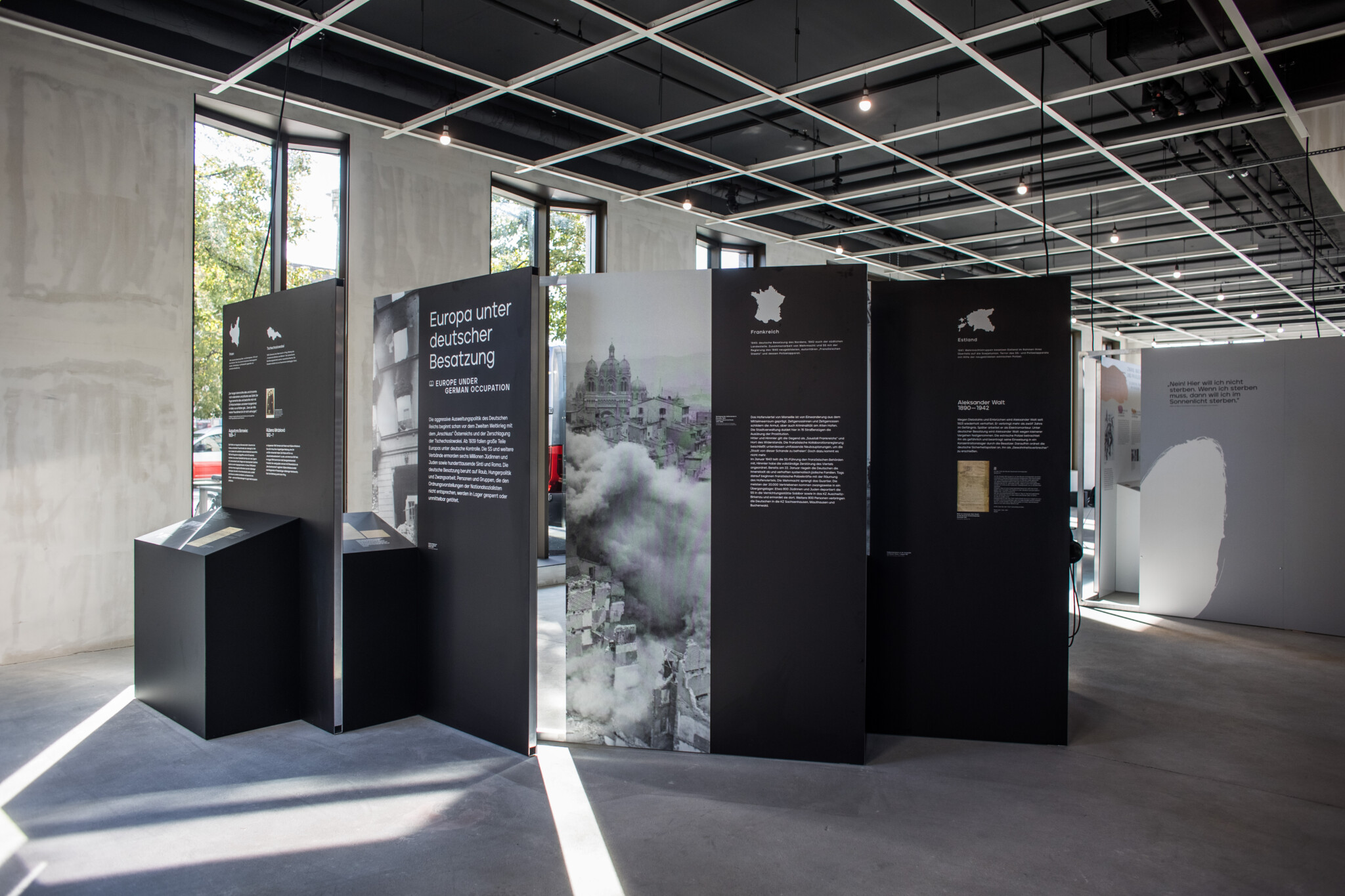
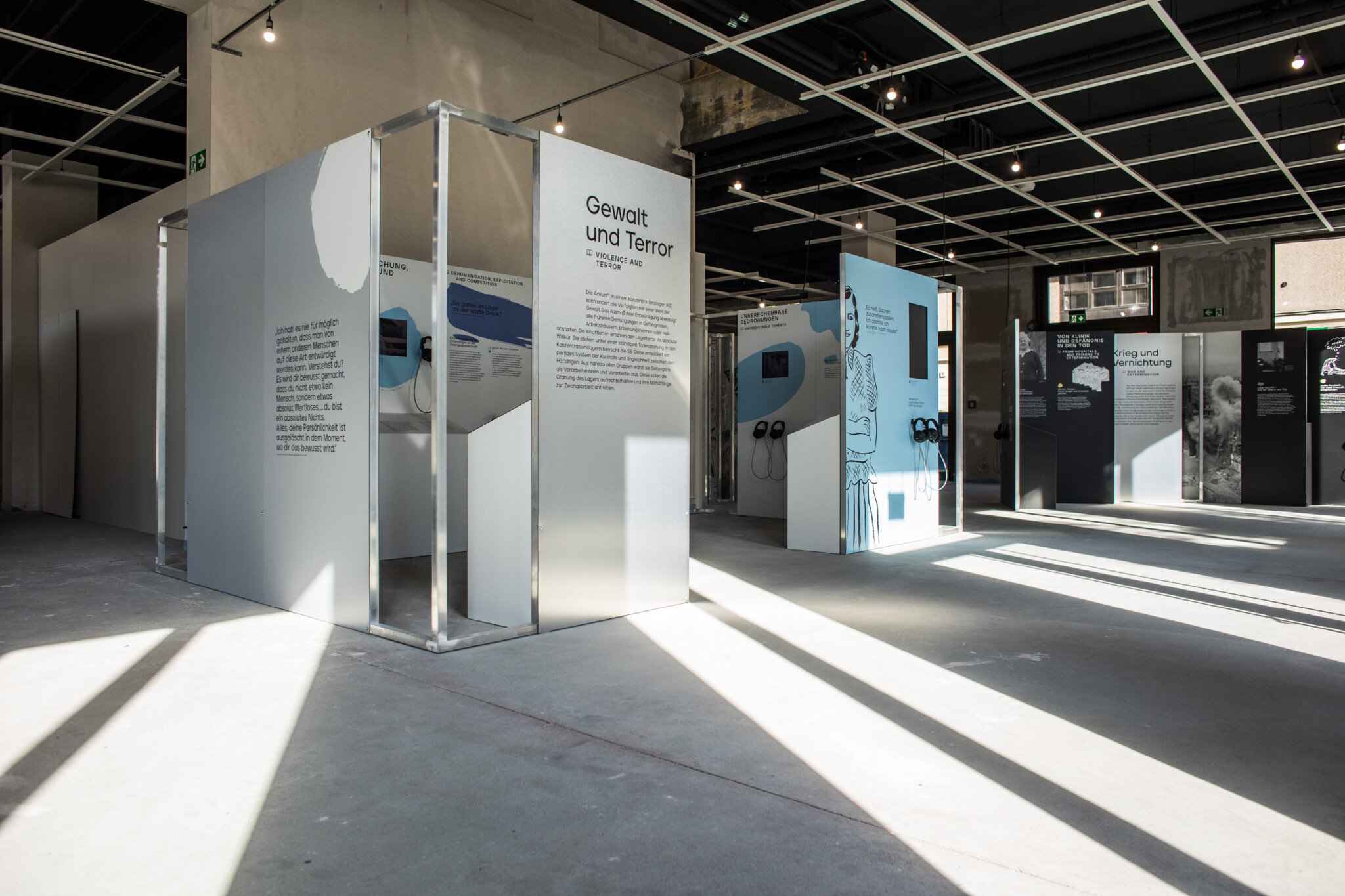
After its opening presentation in Berlin, the exhibition moved to Flossenbürg, Cologne, and most recently to the New Town Hall in Leipzig. There, it attracted not only numerous groups but also many of the regular visitors who visit the town hall every day.